Certification Pathways Connecting Encrypted Transfers to Tiered Access in Mobile-Based Entertainment Suites
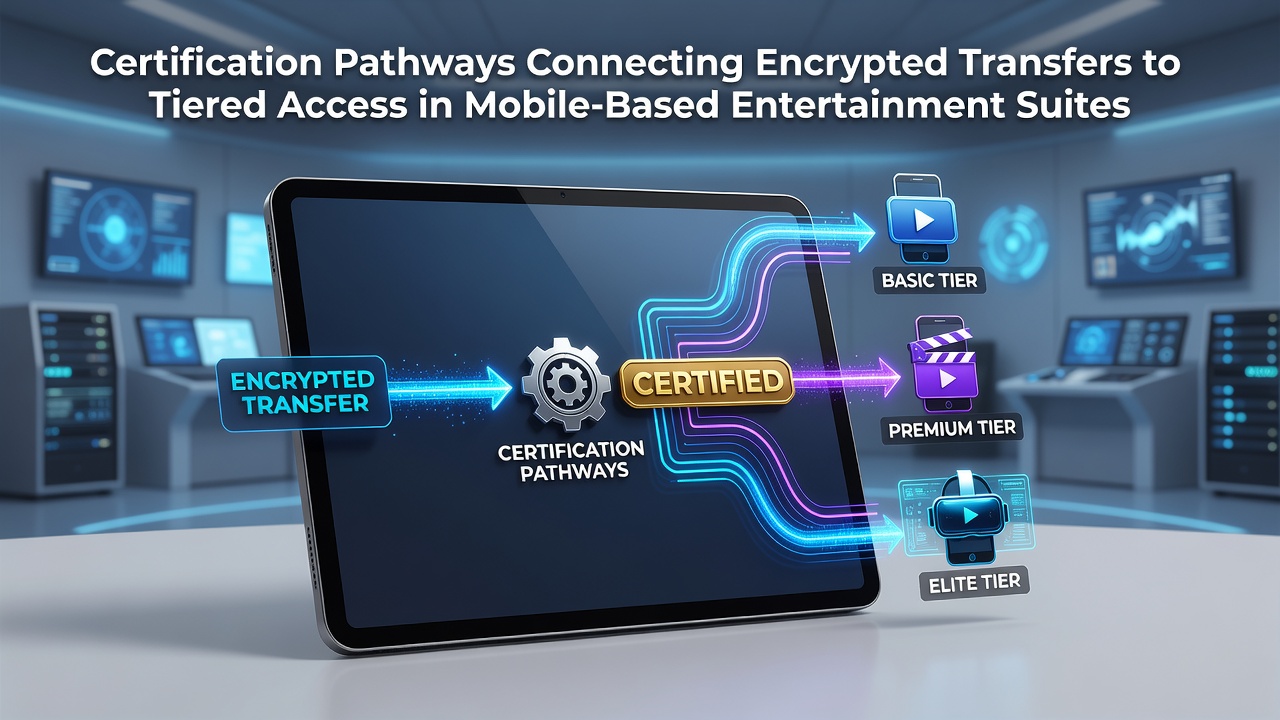
Certification pathways establish structured routes that link encrypted data transfers with tiered access controls across mobile entertainment platforms, and these systems manage user permissions while maintaining data security during content delivery. Observers note that developers integrate these elements to support varied subscription levels in applications handling streaming media, interactive games, and digital libraries.
Core Certification Frameworks
Standards organizations define certification requirements that verify encryption protocols align with access hierarchies, and researchers at institutions such as the National Institute of Standards and Technology document how algorithms like AES-256 secure transmissions between devices and servers. Data from 2025 reports indicate that platforms achieve compliance through documented testing cycles which confirm that encrypted packets reach only authorized tiers without exposure to intermediate nodes.
Certification bodies evaluate mobile suites by examining key management practices alongside role-based permissions, whereas developers must demonstrate that transfer mechanisms prevent unauthorized escalation between basic, premium, and enterprise access levels. Figures from industry audits reveal that successful certifications correlate with reduced incident rates in multi-user environments.
Encrypted Transfer Mechanisms in Practice
Encrypted transfers operate through protocols that authenticate both sender and receiver before content release, and these steps connect directly to tier definitions where lower tiers receive limited metadata while higher tiers unlock full streams. Experts have observed that certificate chains issued by recognized authorities validate each transfer session, and mobile operating systems enforce these checks at the application layer.

Platforms apply end-to-end encryption that segments data flows according to user tier, while token-based systems refresh permissions dynamically during active sessions. Studies conducted through 2025 highlight how certificate revocation lists integrate with real-time monitoring tools to block compromised keys from accessing elevated content layers.
Integration of Tiered Access Models
Tiered access structures assign distinct encryption keys and certificate profiles to each user category, and certification pathways require explicit mapping between these profiles and transfer endpoints. Those who have reviewed platform architectures note that basic tiers often utilize shorter session keys whereas premium tiers incorporate additional authentication factors such as biometric verification tied to the same encrypted channel.
Developers document these mappings during certification audits, and regulatory updates scheduled for June 2026 from the European Union Agency for Cybersecurity are expected to introduce refined guidelines on cross-tier key rotation. Compliance documentation shows that entertainment suites passing these reviews maintain separate audit logs for each tier to support post-certification verification.
Pathway Implementation Steps
Implementation begins with platform registration under recognized certification programs, after which developers submit encryption specifications and access control matrices for evaluation. Review processes examine how certificates propagate through mobile networks, and successful applicants receive pathway endorsements that authorize deployment of tier-specific features.
Testing phases simulate transfer scenarios across multiple device types, and results feed into final certification reports that detail any required adjustments to encryption strength or tier boundaries. Observers tracking adoption rates report that suites completing these pathways experience smoother integration with app store distribution requirements.
Regional Variations in Certification
Different jurisdictions apply distinct criteria when evaluating connections between encrypted transfers and tiered systems, and Australian regulatory sources emphasize local data residency rules alongside encryption standards. Canadian research institutions have published comparative analyses showing how North American frameworks prioritize interoperability between mobile carriers and entertainment providers.
These variations influence how developers structure their certification submissions, while shared international standards facilitate recognition across borders. Reports indicate that platforms operating in multiple regions maintain parallel certification tracks to address each set of requirements without disrupting service continuity.
Conclusion
Certification pathways continue to evolve as encryption standards and tiered access requirements intersect in mobile entertainment environments, and documented processes provide measurable routes for achieving compliance. Ongoing developments through 2026 are projected to refine these connections further, supporting secure delivery across diverse platform tiers while meeting regulatory expectations in multiple regions.